News analysis
Nvidia's Reported $5 Billion SSI Bet Is About More Than GPUs
Nvidia is reportedly investing around $5 billion in Ilya Sutskever's Safe Superintelligence, pairing capital with next-generation Vera Rubin compute and rare access to the lab's undisclosed research.
By Ongoing AI · Published July 27, 2026 · Last updated July 27, 2026
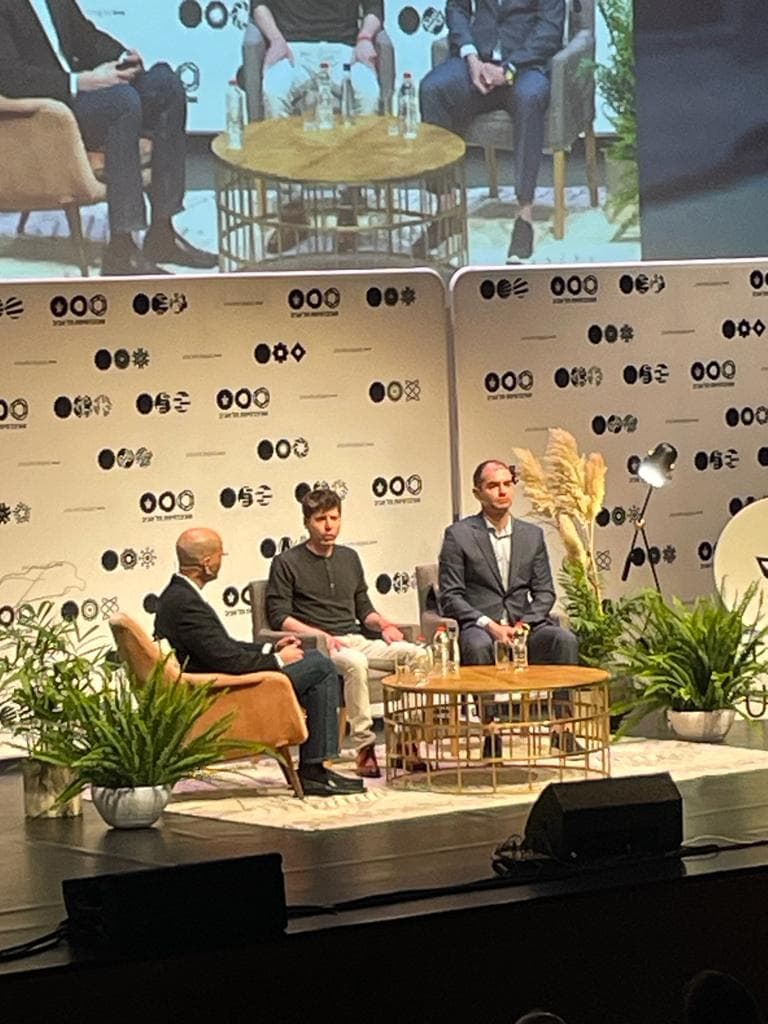
Nvidia is making one of its largest bets yet on an AI company that has no public model, no commercial product, and almost no disclosed research.
Safe Superintelligence Inc., the research lab led by OpenAI co-founder Ilya Sutskever, announced a long-term partnership with Nvidia on Monday. The agreement combines an Nvidia investment with access to the company's Vera Rubin computing platform, which SSI says will increase its available compute by roughly an order of magnitude.
The investment is worth around $5 billion, according to people briefed on the deal who spoke with the Financial Times. Nvidia and SSI have not confirmed the amount, describing it only as "substantial." The newspaper also reported that commitments of this size are commonly tied to milestones.
The amount is remarkable. The structure may be more important.
Nvidia said it entered the partnership after receiving rare access to SSI's closely guarded research, and that the companies will collaborate on the technical development of Nvidia's current and future computing platforms. This is therefore more than a chip order accompanied by venture funding: Nvidia is positioning itself close to a secretive attempt to develop a new AI architecture before that research has been publicly demonstrated.
What happened
SSI and Nvidia announced the partnership on July 27. Under the agreement, Nvidia has made a substantial investment in SSI; SSI will gain access to Nvidia's next-generation Vera Rubin systems and expects its compute capacity to increase roughly tenfold; the two companies will collaborate on future computing platforms; and Nvidia received access to SSI's private research before entering the partnership.
Sutskever said SSI now has research "worthy of scaling up," but neither company described the research, published technical evidence, or identified a model being trained. The reported $5 billion figure comes from the Financial Times, not the official announcement. No new valuation, ownership percentage, or complete funding terms have been disclosed.
This is also not Nvidia's first investment in SSI. Nvidia and Alphabet participated in an earlier funding round that valued the company at $32 billion in 2025, and Google Cloud separately agreed to provide SSI with access to its Tensor Processing Units (TPUs), which became the lab's primary computing platform. The new agreement therefore brings Nvidia much deeper into a company that had previously relied principally on a rival chip architecture.
Timeline
SSI, three months after its founding by Sutskever, Gross, and Levy, raises $1 billion from investors including Andreessen Horowitz, Sequoia Capital, and DST Global; Reuters reports a ~$5 billion valuation.
SSI raises a further $2 billion at a reported $32 billion valuation, with Alphabet and Nvidia joining as investors; Google Cloud agrees to supply TPUs, which become SSI's primary compute.
Sutskever becomes CEO after co-founder Daniel Gross leaves for Meta; Meta had reportedly attempted to recruit Sutskever and acquire SSI, which said it intended to remain independent.
Nvidia and SSI announce a long-term partnership: an Nvidia investment, access to Vera Rubin, and collaboration on future compute. The Financial Times reports the investment at around $5 billion.
What is confirmed — and what is not
The partnership, the "substantial" investment, the planned use of Vera Rubin, the order-of-magnitude compute increase, the future-hardware collaboration, and Nvidia's pre-investment access to SSI's research are all confirmed by the companies. Nvidia's ~$5 billion figure and the presence of milestone conditions are reported by the Financial Times, not officially confirmed. SSI's resulting valuation, Nvidia's ownership stake, the cash-versus-infrastructure split, the specific milestones, the Vera Rubin delivery schedule, and — most importantly — the nature of SSI's claimed research progress all remain unknown.
No public evidence currently allows outsiders to evaluate SSI's claimed progress. "Research worthy of scaling" is a statement from the company, not an independently verified technical result.
Why operators should care
The following is Ongoing AI analysis.
The immediate lesson is not that enterprises should prepare to adopt an SSI model — there is no public SSI model to evaluate. The more relevant signal is that relationships between frontier laboratories and infrastructure providers are becoming much deeper than conventional supplier contracts.
Google Cloud's TPU agreement gave Google an important external customer for its proprietary accelerators. Nvidia's new partnership adds capital, next-generation hardware, and direct technical collaboration. If SSI continues using both architectures, it demonstrates how the most strategically important laboratories can use competition between infrastructure providers to secure funding, capacity, and engineering support.
Vera Rubin is not simply a replacement GPU. Nvidia designed the platform as an integrated system combining its Vera CPU, Rubin GPU, networking, storage, and switching technologies, and claims Rubin substantially reduces training and inference costs versus Blackwell — though those performance claims remain vendor-supplied. For operators, the pattern is clear: access to frontier compute increasingly comes bundled with financing, co-engineering, and strategic alignment.
Why investors should care
The following is Ongoing AI analysis.
Nvidia increasingly occupies several positions in the AI market at once: it supplies the hardware, invests in the companies buying that hardware, and collaborates with them on future systems. That can create several returns from the same relationship — an equity return if SSI's value rises, a major Vera Rubin customer, feedback from an unusually advanced research workload, reduced risk that SSI standardizes on a competitor's platform, and early visibility into a research direction that could reshape future compute requirements.
The arrangement also feeds concerns about circular financing: infrastructure companies invest in laboratories that then spend heavily on infrastructure supplied by those same companies. That does not make the arrangement improper, but it can make underlying demand and financial exposure harder to evaluate.
There is also a hedging read. Sutskever has argued that conventional pretraining is approaching limits because high-quality human-generated data cannot grow indefinitely — that the industry must find something more valuable to scale. By investing after examining SSI's work, Nvidia places itself close to that experiment: if the approach succeeds and demands different networking, memory, or training characteristics, the collaboration could help Nvidia adapt before those requirements become broadly visible. This is an inference from the structure of the partnership, not a disclosed Nvidia strategy.
Finally, the valuation cannot yet be calculated responsibly. It is tempting to use the reported $32 billion prior round to back out Nvidia's stake from a $5 billion investment, but the new valuation, the milestone structure, and the cash-versus-infrastructure split are all missing. Any such calculation would be speculative.
Companies and technologies involved
Nvidia is the dominant supplier of accelerated computing infrastructure for frontier AI. It is both an investor in AI laboratories and the provider of the GPU platforms those labs train on.
Safe Superintelligence Inc. (SSI) is a research lab founded in 2024 by Ilya Sutskever, Daniel Gross, and Daniel Levy, focused exclusively on developing superintelligence while keeping safety ahead of capability. It has no public model or product.
Vera Rubin — Nvidia's next-generation computing platform for large-scale AI training and inference, combining GPUs, CPUs, networking, switching, and data-processing components into an integrated system. Nvidia
Google Cloud TPUs — Google's proprietary AI accelerators and SSI's previously reported primary source of compute. Whether SSI will continue using TPUs alongside Nvidia systems is not yet known.
Ilya Sutskever — SSI's co-founder and CEO; former chief scientist and co-founder of OpenAI, and a contributor to AlexNet, sequence-to-sequence learning, and the GPT research program.
What to watch next
The most important next disclosure would not be another valuation. It would be evidence of what SSI has discovered.
- A paper, system card, benchmark result, or technical demonstration from SSI.
- Confirmation of the reported $5 billion amount and any milestone conditions.
- A new SSI valuation or ownership disclosure.
- Details on the size and delivery schedule of the Vera Rubin deployment.
- Evidence that Nvidia systems are supplementing or replacing Google TPUs.
- Changes to Nvidia's future architecture attributed to work with SSI.
- Any indication of when SSI expects to train, test, or release a model.
For now, the partnership establishes two facts: SSI believes its research is ready for much more compute, and Nvidia has seen enough of that research to make a substantial investment and commit its next-generation platform. Whether SSI has found a path beyond the industry's current methods remains unknown. Nvidia has paid to be close enough to find out.
Sources and updates
- Ilya Sutskever's Safe Superintelligence Inc. and NVIDIA Announce Long-Term Strategic Partnership — NVIDIA, July 27, 2026 · primary source · accessed July 27, 2026
- Nvidia to invest about $5bn in Ilya Sutskever's Safe Superintelligence — Financial Times, July 27, 2026 · accessed July 27, 2026
- Alphabet, Nvidia invest in OpenAI co-founder Sutskever's SSI, source says — Reuters, April 12, 2025 · accessed July 27, 2026
- OpenAI co-founder Sutskever's new safety-focused AI startup SSI raises $1 billion — Reuters, September 4, 2024 · accessed July 27, 2026
- Sutskever to lead Safe Superintelligence after Meta poaches CEO Gross — Reuters, July 3, 2025 · accessed July 27, 2026
- NVIDIA Rubin platform — NVIDIA · primary source · accessed July 27, 2026
- Safe Superintelligence — mission — Safe Superintelligence · primary source · accessed July 27, 2026
Update history
- July 27, 2026 — Initial publication.
Get the next briefing
Ongoing AI tracks the companies, capital, technology, and enterprise adoption shaping the AI economy.
The consequential AI developments — connected to the companies, capital, technology, and enterprise adoption they affect. Unsubscribe anytime.