News analysis
The US Is Building a National AI Stack for Science
The Genesis Mission expanded with more than $5 billion in federal commitments, 278 selected projects, and a shared platform connecting national laboratories, scientific data, and private AI companies. The headline number needs qualification.
By Ongoing AI · Published July 27, 2026 · Last updated July 27, 2026
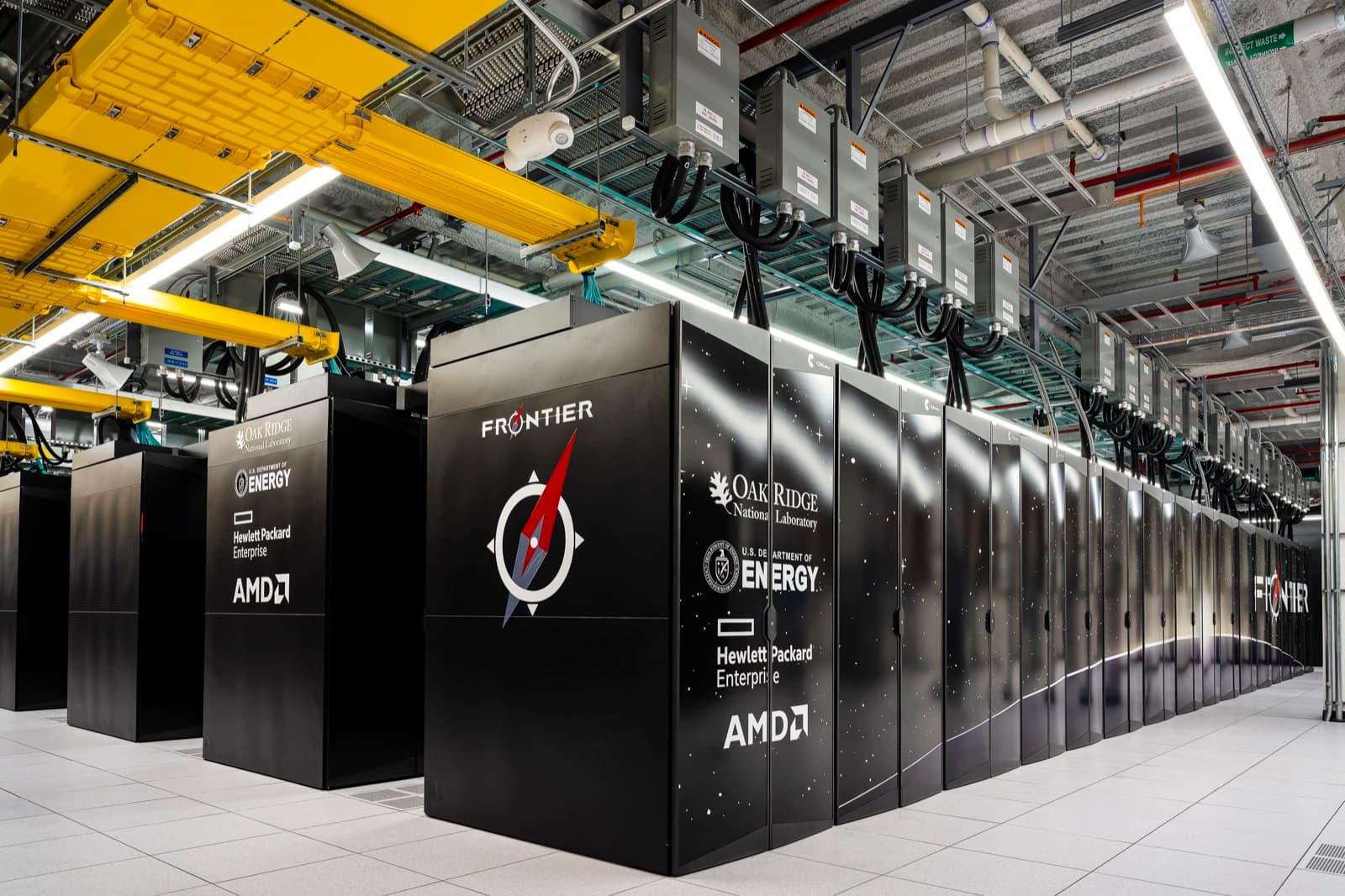
The United States government is putting artificial intelligence at the center of its scientific research infrastructure. On July 22, the White House announced more than $5 billion in federal commitments for the Genesis Mission — an initiative to connect government datasets, national-laboratory supercomputers, scientific instruments, and private-sector AI systems through a shared research platform. The Department of Energy simultaneously announced 278 projects selected for award negotiations, led mostly by universities but including national laboratories, companies, and nonprofits.
The headline number requires qualification. The $5 billion is not a single grant program or one newly appropriated pool of money — it combines commitments from more than 15 federal agencies that may include research awards, future funding opportunities, computing infrastructure, scientific datasets, and access to government facilities. Industry partners separately reported more than $800 million in support, a figure that includes compute credits, cloud infrastructure, model access, technical expertise, and research partnerships — not only cash.
The larger development is institutional rather than financial. Genesis Mission is attempting to build a national AI stack for science: government data at the bottom, federally controlled computing in the middle, and models, agents, and automated research workflows on top.
What happened
President Trump established the Genesis Mission through Executive Order 14363 in November 2025, directing the Department of Energy to build and operate the American Science and Security Platform — shared infrastructure providing high-performance computing and secure cloud, AI models and agent frameworks, simulation and design tools, domain-specific foundation models, secure access to federal and proprietary datasets, and AI-assisted experimental systems. The order placed the DOE at the center, with the White House Office of Science and Technology Policy coordinating agencies.
The program has since expanded into a whole-of-government initiative. On July 22, the White House announced more than $5 billion across 15+ agencies and published a set of National Science and Technology Challenges spanning health, energy, infrastructure, manufacturing, fundamental science, and national security. The DOE announced that 278 projects had been selected from what it called the largest response to a funding opportunity in its history: 168 university-led, 87 DOE or NNSA laboratory-led, 19 company-led, and 4 nonprofit-led, with 342 institutions participating. The projects range from AI-assisted nuclear-reactor development and critical-mineral extraction to synthetic genome design, grid resilience, particle physics, and autonomous laboratories. The largest single selection is a proposed three-year, $60 million nuclear-energy project.
Timeline
President Trump signs Executive Order 14363 establishing the Genesis Mission, directing the Department of Energy to build the American Science and Security Platform, with the White House Office of Science and Technology Policy coordinating agencies.
The Department of Energy signs collaboration agreements with 24 organizations; Reuters identifies partners including Microsoft, Google, Nvidia, AWS, Oracle, IBM, Intel, AMD, HPE, OpenAI, Anthropic, xAI, Palantir, Cerebras, and Groq.
The Department of Energy opens a Genesis Mission request for applications; its funding FAQ says approximately $293.76 million was expected for the initial competition.
The White House announces more than $5 billion in commitments across 15+ agencies; the DOE selects 278 projects (342 institutions) for award negotiations; the Consortium reports more than $800 million in partner support; and the Department of War says it is on track to commit $200M+ in FY2026 and $1.3B+ in FY2027.
The White House · US Department of Energy · US Department of Energy
What is confirmed — and what is not
Confirmed: Genesis Mission was established by executive order in November 2025; the DOE runs the central platform with White House OSTP coordinating; more than 15 agencies now participate; the White House announced more than $5 billion in commitments; the DOE selected 278 projects across 342 institutions; the Consortium reported more than $800 million in partner support; and all 17 DOE national labs and five NNSA sites are represented.
The important qualifications are where the story lives. The 278 projects are selected for award negotiations — selection does not guarantee an award, and DOE can cancel negotiations or rescind a selection. The $5 billion is an aggregate commitment, not one grant fund, and no itemized accounting has been published. The $800 million in private support is not necessarily cash — it includes compute, credits, model access, cloud, expertise, and partnerships. Future-year commitments depend on appropriations and completed agreements, and the program's goal of doubling the productivity of American science within a decade is a target, not a demonstrated outcome.
Why operators should care
The following is Ongoing AI analysis.
Genesis Mission could become one of the most important public-sector deployment environments for scientific AI — designed around full research workflows in which models interact with simulation tools, databases, supercomputers, sensors, laboratory equipment, and other agents. That creates opportunity for companies building scientific foundation models, agent infrastructure, model evaluation, data-integration and metadata tools, HPC software, secure cloud, digital twins, lab robotics, instruments, access control, and provenance/reproducibility infrastructure.
Participating requires more than general AI capability. Federal scientific systems operate under procurement, cybersecurity, sensitive-data, IP, export-control, and sometimes classification requirements — and the ability to document where a model came from, what data it accessed, which tools it called, and how a result was validated may matter as much as benchmark performance. The consortium model also creates a route into federal AI work that doesn't begin with winning a conventional contract: a company can contribute infrastructure or expertise, join a project team, and later compete for funded work. The risk is symmetrical — a company may provide valuable technology without an immediately visible cash contract, and announced participation should not be read as federal revenue.
Why investors should care
The following is Ongoing AI analysis.
Genesis Mission gives the AI-for-science market a large institutional customer and coordinating body. The federal government holds scientific assets private companies generally cannot reproduce — decades of experimental data, nuclear and energy facilities, large-scale instruments, national-security datasets, and some of the world's most powerful supercomputers — while private firms hold complementary assets the government does not want to rebuild: frontier models, clouds, accelerators, agent frameworks, and production software. The program connects the two, which may create durable advantages for providers embedded early: once a model, cloud environment, or data layer becomes part of a validated scientific workflow, replacing it can require new testing, security review, and integration. The program could become a distribution channel as much as a research initiative.
The initial partners span nearly every layer of the stack — Nvidia, AMD, Intel, Cerebras, and Groq in computing; Microsoft, Google, AWS, and Oracle in cloud; OpenAI, Anthropic, and xAI in frontier models; Palantir in data integration; national labs in supercomputers and facilities. But the risks are real and specific: a consortium membership is not a contract, an in-kind commitment is not revenue, a project selected for negotiations is not a completed award, and a future-year agency commitment is not obligated funding. Investors will need to track the conversion from announcement to agreement, agreement to award, and award to recognized revenue.
Companies, programs, and people involved
OpenAI is an AI research and product company that develops frontier models, including the GPT series, and distributes them through ChatGPT and a developer API.
Nvidia is the dominant supplier of accelerated computing infrastructure for frontier AI. It is both an investor in AI laboratories and the provider of the GPU platforms those labs train on.
Microsoft is a cloud and enterprise-software company and a major AI-security actor. It develops MDASH, a multi-model agentic vulnerability-discovery system, and is an inaugural member of the Open Secure AI Alliance.
Anthropic is an AI research and product company that develops the Claude family of models. It was the defendant in Bartz v. Anthropic, a class action over books downloaded from piracy sites and used in developing Claude, which it settled for at least $1.5 billion.
Genesis Mission — the overarching federal initiative to accelerate scientific discovery using AI. American Science and Security Platform — the shared DOE-built infrastructure connecting data, computing, models, agents, and equipment. Genesis Mission Consortium — the public-private mechanism linking national labs with companies, universities, nonprofits, and philanthropies.
Department of Energy — the lead implementing agency and platform operator. White House Office of Science and Technology Policy — the cross-government coordinator. Named leaders include Michael Kratsios (White House science and technology adviser), Chris Wright (Secretary of Energy), and Darío Gil (DOE under secretary for science and Genesis Mission director). Partner model providers include OpenAI (via OpenAI for Science) and Anthropic (Claude models, agent and MCP integrations, and scientific skills), alongside Nvidia, Microsoft, and Google for compute and cloud.
Ongoing AI analysis
The most important part of Genesis Mission is not the $5 billion headline — it is the government's attempt to create a platform around which federal science, private AI companies, and research institutions coordinate. Traditional science funding treats the project as the main unit: an investigator proposes, an agency evaluates, a grant supports the work. Genesis adds a layer — researchers may still receive project funding, but their work is expected to connect to shared models, datasets, computing, and automated workflows. That turns infrastructure providers into participants in the scientific process, and makes the government a market maker: by defining common challenges and providing unique data and facilities, it can encourage companies to build capabilities no single commercial customer would justify.
The strongest version produces reusable scientific infrastructure — validated models, interoperable datasets, reproducible workflows, automated labs. The weaker version becomes a loose collection of projects sharing a brand while relying on incompatible tools, inaccessible data, and unverified claims of accelerated discovery. The difference will depend on standards. Scientific models cannot be judged by fluency or general benchmarks alone; they must produce results that are traceable, reproducible, and consistent with physical evidence, and when agents operate instruments the system must record which model acted, which data it used, what tools it called, and where humans reviewed. Genesis Mission could therefore become an important proving ground for the infrastructure required to make agentic AI accountable in high-consequence environments.
What to watch next
- How many of the 278 selections become signed awards, and which are reduced or rescinded.
- An itemized breakdown of the $5 billion across new awards, existing programs, future opportunities, and infrastructure access.
- Cash versus in-kind separation of the $800 million partner total.
- Who can access the American Science and Security Platform, and how models (proprietary, open-weight, or scientific foundation models) are chosen.
- Data and IP rules where federal data, company technology, and university research meet.
- The security architecture separating open science, commercially sensitive, and national-security work.
- Which consortium relationships convert into procurement contracts or recurring revenue.
- Whether independent researchers can reproduce results generated through proprietary models and agents.
Sources and updates
- More than $5 billion for the Genesis Mission — The White House, July 22, 2026 · primary source · accessed July 27, 2026
- Executive Order 14363: Launching the Genesis Mission — The White House, November 24, 2025 · primary source · accessed July 27, 2026
- Secretary of Energy Chris Wright announces first Genesis Mission projects selected — US Department of Energy, July 22, 2026 · primary source · accessed July 27, 2026
- US Department of Energy announces more than $800 million in partner commitments — US Department of Energy, July 22, 2026 · primary source · accessed July 27, 2026
- Genesis Mission RFA — funding FAQ — US Department of Energy, Office of Science, March 23, 2026 · primary source · accessed July 27, 2026
- US Energy Department taps Big Tech for AI-powered research push — Reuters, December 18, 2025 · accessed July 27, 2026
- Department of War partners with the Genesis Mission to proliferate AI for science — US Department of War · primary source · accessed July 27, 2026
- Genesis Mission Consortium — Genesis Mission Consortium · primary source · accessed July 27, 2026
Update history
- July 27, 2026 — Initial publication.
Get the next briefing
Ongoing AI tracks the companies, capital, technology, and enterprise adoption shaping the AI economy.
The consequential AI developments — connected to the companies, capital, technology, and enterprise adoption they affect. Unsubscribe anytime.